Have you ever lost something valuable and wished you had a magic tool to find it instantly? Every single year, millions of people lose personal belongings, fleet vehicles, and high-value tools. Finding lost items used to be stressful, slow, and expensive. Today, smart asset tracking technology has completely transformed how we keep track of what matters most. That is where modern location intelligence tools like tracqueur step in to save the day.
Whether you manage a busy business fleet or simply want to secure your personal car, staying connected to your property is vital. Modern tracking tools give you instant peace of mind through your smartphone or computer screen. In this complete guide, we will explore everything you need to know about tracqueur devices and software systems. You will learn how the technology works, why it is growing so quickly, and how to choose the right solution for your specific daily needs.
What Is Tracqueur?
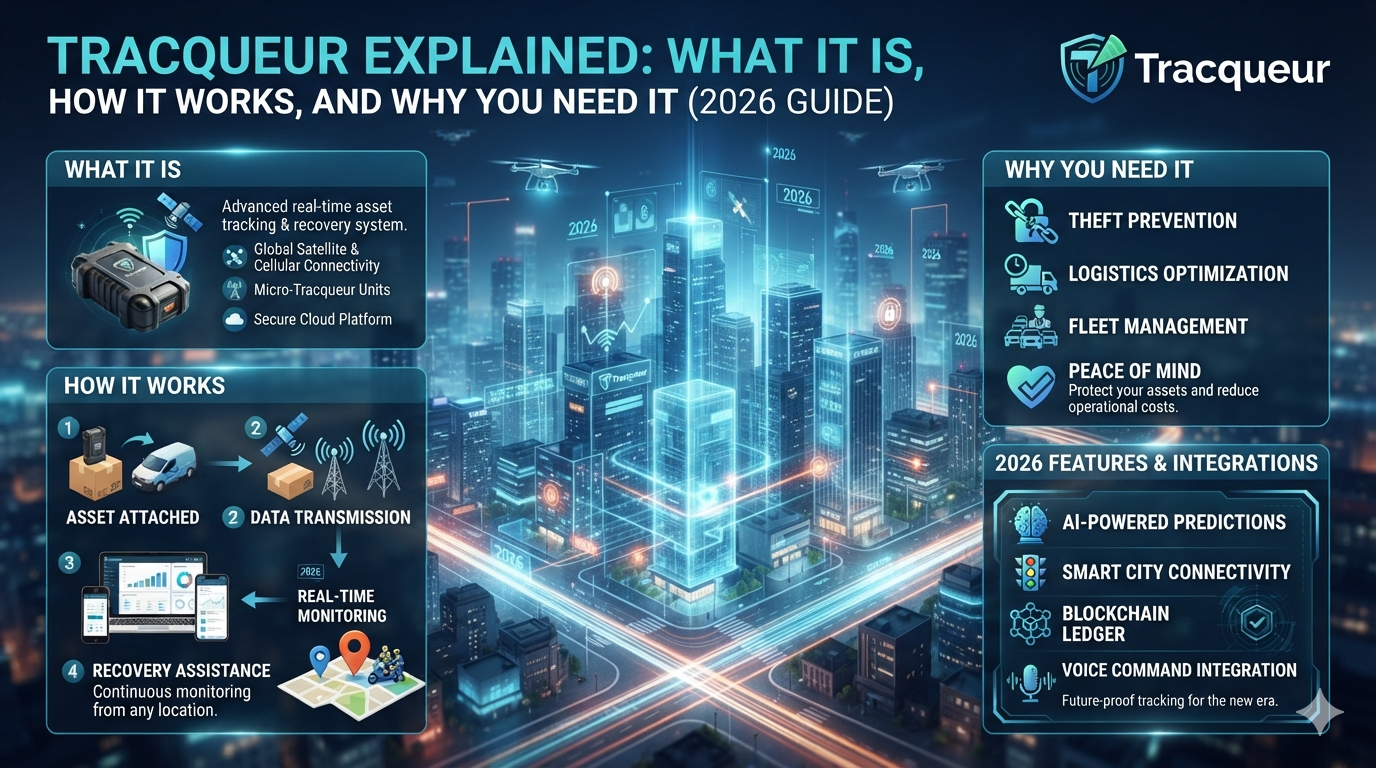
At its core, tracqueur is a specialized tracking technology designed to monitor, trace, and locate physical assets or digital data. The word originates from the French term for “tracker” or “hunter,” which highlights its primary mission: hunting down exact locations. Today, people use tracqueur systems to monitor cars, heavy machinery, shipping packages, and even personal gear.
Unlike traditional tracking setups that were clunky and hard to set up, a modern tracqueur uses smart sensors, global GPS networks, and cellular signals. It gathers real-time location data and sends it straight to your cloud dashboard or phone app. This continuous connection ensures you always know where your valuable assets are resting or moving, no matter where you are in the world.
At-a-Glance Profile: Tracqueur Overview
To help you understand the key facts quickly, we compiled this complete summary table based on industry standards and market insights.
| Feature / Attribute | Details & Specifications |
| Primary Category | Location Intelligence & Asset Tracking Technology |
| Core Functions | Real-time GPS tracking, anti-theft recovery, geofencing, asset management |
| Connectivity Types | Satellite (GPS), Cellular (4G/5G), Sigfox, UHF, Low-Power IoT |
| Target Audience | Business fleet owners, vehicle drivers, equipment managers, personal users |
| Power Source | Long-life lithium batteries (3–5 years) or hardwired vehicle power |
| Key Benefits | Rapid theft recovery, lower insurance costs, continuous location visibility |
How Does Tracqueur Technology Work?
Understanding how a tracqueur works is much simpler than most people think. The unit contains a small receiver that receives signals from global navigation satellites orbiting Earth. The device calculates its exact location coordinates using these satellite signals. Once it finds its location, it transmits those coordinates over a wireless network to a secure server.
After the data reaches the server, it instantly appears on your computer screen or mobile application. You can view a live map with a pin showing the exact spot of your vehicle or equipment. Advanced units also send alerts if the item moves outside a designated safe area that you set up ahead of time.
The Main Types of Tracqueur Units Available Today
Not every tracking job is the same, so manufacturers build different kinds of hardware to match different goals. The most common choice is a plug-and-play vehicle unit that hooks directly into an OBD port. These devices run on the car’s battery, so you never have to worry about charging them. They work great for daily drivers and business fleets.
Another popular option is an autonomous battery-powered tracqueur. These tiny devices run on special long-life internal batteries that can last up to five full years. Because they do not need wires, you can hide them easily inside trailers, cargo containers, high-value bicycles, or toolboxes without drawing any unwanted attention.
Top Benefits of Using a Tracqueur for Your Vehicles
Installing a tracqueur in your vehicle offers far more than just basic map dots. First and foremost, it provides unmatched theft protection and recovery assistance. If someone steals your vehicle, police officers can use the live broadcast signal to locate and recover the stolen property in record time.
In addition to theft recovery, using a tracqueur can significantly lower your vehicle insurance premiums. Insurance companies love tracking devices because they dramatically reduce the risk of total loss. Over time, the savings on your monthly insurance bill can completely pay for the device itself, making it a very smart financial investment.
Key Features to Look for Before Buying a Tracqueur
When shopping for your device, you should always check the battery life specifications carefully. If you choose an autonomous unit, ensure it offers at least three years of battery standby power. You do not want a unit that dies when you need it most. Check if the battery is easily replaceable or rechargeable before making your final choice.
Another vital feature to evaluate is weather resistance and overall casing durability. A high-quality tracqueur must hold an IP67 or IP68 waterproof rating to survive mud, rain, and harsh road conditions. Additionally, look for built-in anti-jamming features so signal blockers cannot disable your device during an attempted theft.
How Businesses Use Tracqueur Solutions for Fleet Management
For commercial business owners, keeping track of company drivers and vans is crucial for daily success. Integrating a tracqueur across your entire commercial fleet allows you to monitor fuel usage, driving behavior, and daily delivery speeds. You can easily see which drivers take efficient routes and which ones spend unnecessary time idling in traffic.
“Implementing smart location tracking across our delivery vans cut our fuel spending by 18 percent in less than three months while improving on-time customer deliveries.”
Furthermore, modern fleet management systems generate automated maintenance reports based on exact mileage. This helps fleet operators schedule oil changes, tire rotations, and brake inspections before costly breakdowns happen on the road.
Tracqueur vs. Standard Consumer Bluetooth Tags
Many people wonder if cheap Bluetooth key finders can replace a dedicated tracqueur device. While Bluetooth tags work fine for finding keys lost inside your living room, they fail miserably over long distances. Bluetooth tags rely on nearby smartphones to update their position, meaning they cannot give you live updates in remote or unpopulated areas.
In contrast, a dedicated tracqueur uses real GPS satellites and independent cellular or IoT networks. It works everywhere outdoors, even on lonely highways or inside storage yards. If security, continuous updates, and real-time tracking truly matter to you, a true tracking unit is always the far superior choice.
Step-by-Step Guide to Setting Up Your Tracqueur
Setting up your new location system is fast, straightforward, and requires no special technical experience. Follow these four simple steps to get started:
- Unbox and Charge: Unbox your device and fully charge its internal battery or check its built-in power supply.
- Download the Official App: Download the official tracking app on your iOS or Android smartphone and create a free account.
- Register Your Device ID: Scan the QR code printed on your tracqueur unit to pair it directly with your account.
- Securely Mount the Unit: Mount the unit in a hidden spot on your vehicle or asset using strong magnetic mounts or cables.
Once mounted, take your vehicle for a brief five-minute test drive to confirm that signal updates show up accurately on your mobile map screen.
The Future of Tracqueur Technology and Artificial Intelligence
The location tracking industry is evolving faster than ever thanks to recent advancements in artificial intelligence. Future tracqueur models will use AI algorithms to predict traffic congestion, forecast vehicle maintenance needs, and automatically detect unusual driving behavior before accidents happen.
Additionally, satellite micro-constellations are making global coverage cheaper and much more reliable. In the coming years, every single tracqueur will offer millimeter-level location accuracy, even inside deep underground parking garages and dense concrete buildings. Staying ahead of these technological trends ensures your assets remain safe and connected well into the future.
Conclusion
Protecting your valuable property should never be left to pure luck. Investing in a reliable tracqueur gives you complete visibility, instant security alerts, and peace of mind every hour of the day. Whether you manage twenty commercial delivery trucks or want to keep your family car safe, modern location tracking technology offers an easy and affordable answer. Take action today by exploring modern tracking solutions and secure what matters most to you!
(FAQs)
1. What does the term tracqueur actually mean?
The word comes from the French word for “tracker” or “hunter”. In modern technology, it refers to specialized GPS and IoT devices used to monitor and locate vehicles, equipment, or assets in real time.
2. How long does a tracqueur battery usually last?
Battery life depends on the specific model you purchase. Hardwired units run continuously on your vehicle battery, while autonomous battery-powered units can last anywhere from 3 to 5 years on a single charge.
3. Can a tracqueur work inside underground parking garages?
Yes, modern tracking units use multi-network technology combining GPS, cellular, and ultra-high frequency (UHF) signals. This allows them to maintain accurate location tracking even inside covered structures and basement parking areas.
4. Will installing a tracqueur lower my vehicle insurance bill?
In most cases, yes! Many major auto insurance providers offer discounts for vehicles equipped with active GPS tracking and theft-recovery systems. Contact your insurance agent to check your available discount options.
5. How is a tracqueur different from a simple Bluetooth key tag?
Bluetooth tags only work over short distances (usually under 100 feet) and depend on nearby smartphones. A tracqueur uses satellite GPS and cellular networks, providing true global coverage and real-time updates wherever your asset moves.
6. Is it easy to install a tracqueur by yourself?
Absolutely! Most modern tracking units are completely wireless or plug directly into your car’s standard OBD-II port without requiring any complex wiring tools. You can complete the full setup in under ten minutes.